When is winter diesel available?
According to the ADAC, Germany’s largest motoring organisation, winter diesel flows from diesel pumps in Germany from mid-November to the end of February – petrol stations are obliged to sell it. The details are set out in the diesel standard DIN EN 590: from 16 November to 28 February (29 February in leap years), diesel must remain filterable down to −20 °C. Before and after that there is a transition period, in autumn from 1 October to 15 November and in spring from 1 March to 14 April. Transition diesel must be filterable down to −10 °C, summer diesel only down to 0 °C.
| Period | Grade | Filterable down to (CFPP) |
|---|---|---|
| 15 Apr to 30 Sep | Summer diesel | 0 °C |
| 1 Oct to 15 Nov | Transition diesel | −10 °C |
| 16 Nov to 28/29 Feb | Winter diesel | −20 °C |
| 1 Mar to 14 Apr | Transition diesel | −10 °C |
Limits under DIN EN 590 for Germany, as excerpted by the German fuel industry association en2x. The CFPP is the temperature at which paraffin crystals can clog a fuel filter.
You do not pay extra for winter diesel, and you do not have to choose anything: the pump still says “Diesel”, and the grade changes with the season by itself.
What is different about winter diesel?
Diesel contains paraffins. When it gets cold, they separate out as wax crystals – the diesel “gels”. The crystals can clog the fuel filter, and then the engine no longer gets any fuel. How cold it may get is described by the CFPP (cold filter plugging point): the temperature at which paraffin crystals can clog the filter.
According to the ADAC, winter diesel contains additives meant to prevent gelling. They are already blended in at the refinery – you do not need to add anything at the station or at home.
Can winter diesel still gel?
Yes. According to the ADAC, winter diesel is meant to work down to minus 20 degrees, but from around minus seven degrees the first paraffin particles form even in winter diesel. That is why many diesel models have a fuel or filter heater. Where there is none, some manufacturers offer a retrofit. The ADAC calls for winter diesel to work down to at least −20 °C even in cars without a filter heater.
It becomes critical above all when there is still a lot of summer diesel in the tank and a sudden frost sets in. For temperatures below −20 °C the ADAC names premium diesel as an alternative: according to the manufacturers it is much more resistant to cold, but it is also more expensive.
Additives and petrol: what you should not do
- Use flow improvers from accessory shops only if the vehicle manufacturer has approved them (ADAC).
- Do not mix petrol into diesel. What used to be common practice can cause costly damage to the injection system, according to the ADAC. The only exception is older cars (roughly before model year 1997), if the manufacturer allows it. What to do after a mix-up at the pump is explained in Wrong fuel.
- Do not fill up with diesel from cans or storage containers unless you know it is fit for winter – it may still be summer fuel.
Is HVO100 cold-resistant?
HVO100 is not covered by the diesel standard DIN EN 590 but by the standard for paraffinic diesel fuels, DIN EN 15940. How resistant it is to cold depends on the product. Suppliers such as Knauber state that their HVO100 has the same cold properties as winter diesel, down to −22 °C; the ADAC writes in its boating guide that with HVO there is no need to switch to winter diesel. We cannot derive a limit for all HVO grades from this – if in doubt, ask the station for the cold rating.
Also: you may fill up with HVO100 only if your car is approved for it. You can tell by the XTL symbol on the fuel flap; normal diesel carries the symbol B7.
The EU labels on pumps and filler caps
Since October 2018, pumps, nozzles and new cars in the EU have carried the same symbols (standard EN 16942). The shape shows the type of fuel, the lettering the grade.
Circle: petrol
- E5 – Super petrol with up to 5% ethanol
- E10 – Super petrol with up to 10% ethanol
- E85 – up to 85% ethanol, for flex-fuel cars only
Square: diesel
- B7 – diesel with up to 7% biodiesel – standard diesel
- B10 – diesel with up to 10% biodiesel
- XTL – paraffinic diesel, for example HVO100
Diamond: gas and hydrogen
- H2 – hydrogen
- CNG – compressed natural gas
- LPG – autogas (liquefied petroleum gas)
- LNG – liquefied natural gas
Tips for diesel drivers in winter
- Fill up with winter diesel in good time: from mid-November, do not run the tank almost empty on old summer diesel and then top up in a frost – according to the ADAC, the remaining summer diesel should be as little as possible.
- Park sheltered: in a garage if possible, or at least out of the wind.
- Change the fuel filter as per the service schedule set by the manufacturer.
- If the diesel has gelled: put the car in a garage that is well above 0 °C and wait until the whole fuel system has thawed. No hair dryer and no heat gun – risk of fire and damage. Afterwards check the filter heater, fill up with standard-compliant fuel and replace the filter if necessary.
Is diesel more expensive in winter?
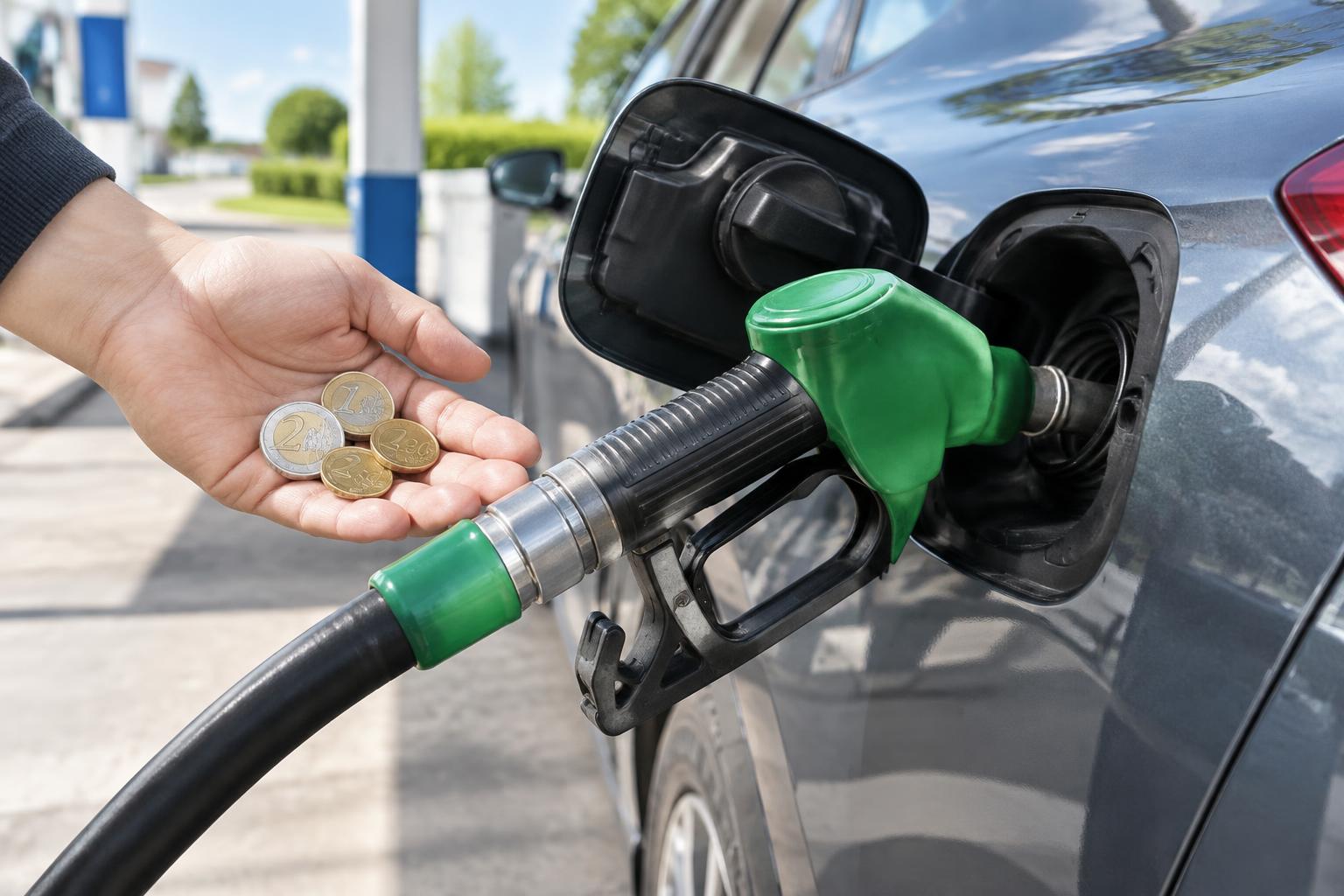
Winter diesel itself costs nothing extra, according to the ADAC. But the gap between diesel and Super E10 varies over the year – why is explained in Diesel and petrol. We work out the gap every day from the daily averages of all petrol stations in Germany (our own calculation). It shows how things have been so far and is no forecast for this winter.
Gap between Diesel and Super E10
Daily average for Germany: above the zero line Diesel was dearer than Super E10, below it cheaper. In cents per litre.
On 31 Oct
Diesel 21.1 ct dearer
Average of the last 16 days
Diesel 17.5 ct dearer
Smallest gap · 17 Oct
+14.3 ct
Largest gap · 28 Oct
+21.6 ct
Daily values since 16 October 2026 (16 days). A look at past values – not a forecast.
Own calculation by Spritfuchs24.de from the prices of the Market Transparency Unit for Fuels (MTS-K), provided by Tankerkönig.de: hourly readings under CC BY 4.0, where available the historical archive under CC BY-NC-SA 4.0. Data as of: 31 October 2026. Past prices say nothing about future ones.
What you pay in your town right now is shown on every city page, with all petrol stations and their current diesel prices.
Frequently asked questions about winter diesel
When is winter diesel available?
Under DIN EN 590 from 16 November to 28 February (29 February in leap years). According to the ADAC, petrol stations in Germany are obliged to sell winter diesel during this time. From 1 October to 15 November and from 1 March to 14 April there is transition diesel.
Down to what temperature does winter diesel work?
Under DIN EN 590, winter diesel must remain filterable down to −20 °C (CFPP), transition diesel down to −10 °C, summer diesel down to 0 °C. According to the ADAC, however, the first paraffin particles form from around −7 °C, which is why many diesel cars have a filter heater.
Does winter diesel cost more?
No, according to the ADAC winter diesel costs nothing extra. Only premium diesels, which the manufacturers say are even more resistant to cold, are more expensive.
Should I add anything to my diesel?
Only if the vehicle manufacturer has approved the flow improver. The additives needed are already in winter diesel from the refinery. Petrol must not be mixed into diesel.
What should I do if my diesel has gelled?
Put the car in a garage that is well above 0 °C and wait until the fuel system has thawed. Do not use a hair dryer or heat gun. Afterwards have the filter heater checked and the filter replaced if necessary.
Does HVO100 need winter diesel?
HVO100 is a fuel of its own under DIN EN 15940. Suppliers state that it has the same cold properties as winter diesel; the ADAC writes in its boating guide that with HVO there is no need to switch to winter diesel. The exact cold rating depends on the product.
Sources
- ADAC: Winter diesel – when does diesel freeze, and what can you do? (8 January 2026, in German)
- ADAC: Sub-zero temperatures can cause trouble for diesel (12 February 2021, in German)
- en2x – German fuel and energy industry association: training booklet 12, annex 5 “Standardised properties of diesel fuel” (DIN EN 590, excerpt, in German)
- ADAC Skipper: HVO for boats (in German)
- Knauber: KlimaDiesel HVO 100 (supplier information, in German)
Last updated: